

Verify that your data is complete and approved before your sector finalizes its regulation. And when it changes, adapt it without starting from scratch.
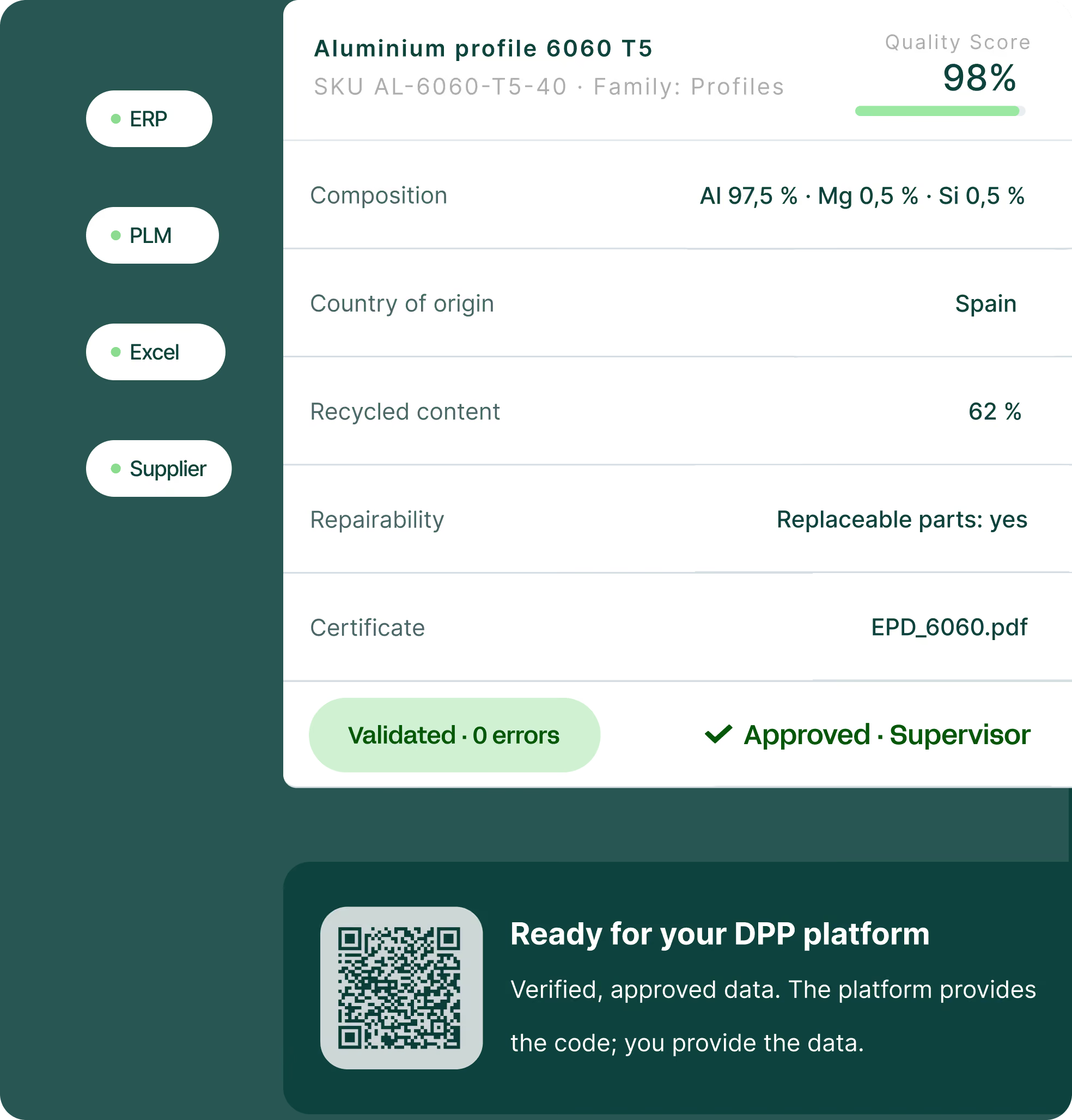
Lorem ipsum dolor sit amet, consectetur adipiscing elit. Suspendisse varius enim in eros elementum tristique. Duis cursus, mi quis viverra ornare, eros dolor interdum nulla, ut commodo diam libero vitae erat. Aenean faucibus nibh et justo cursus id rutrum lorem imperdiet. Nunc ut sem vitae risus tristique posuere.
Lorem ipsum dolor sit amet, consectetur adipiscing elit. Suspendisse varius enim in eros elementum tristique. Duis cursus, mi quis viverra ornare, eros dolor interdum nulla, ut commodo diam libero vitae erat. Aenean faucibus nibh et justo cursus id rutrum lorem imperdiet. Nunc ut sem vitae risus tristique posuere.
The Digital Product Passport is the European system that gives access, from an identifier on the product, to each item's sustainability, circularity and compliance information. Requirements arrive sector by sector, in waves, and the code is only the last mile. More about the DPP at the European Commission

Composition, origin, certificates and recycled content sit in separate unstructured systems.

Your sector's requirements will be published and then revised. A rigid model ages in months.

You need to add a DPP data layer to your catalog, not maintain a parallel database.
Three steps on the catalog you already have in Sales Layer. And when regulation changes, you adjust step 1: the rest is already done.
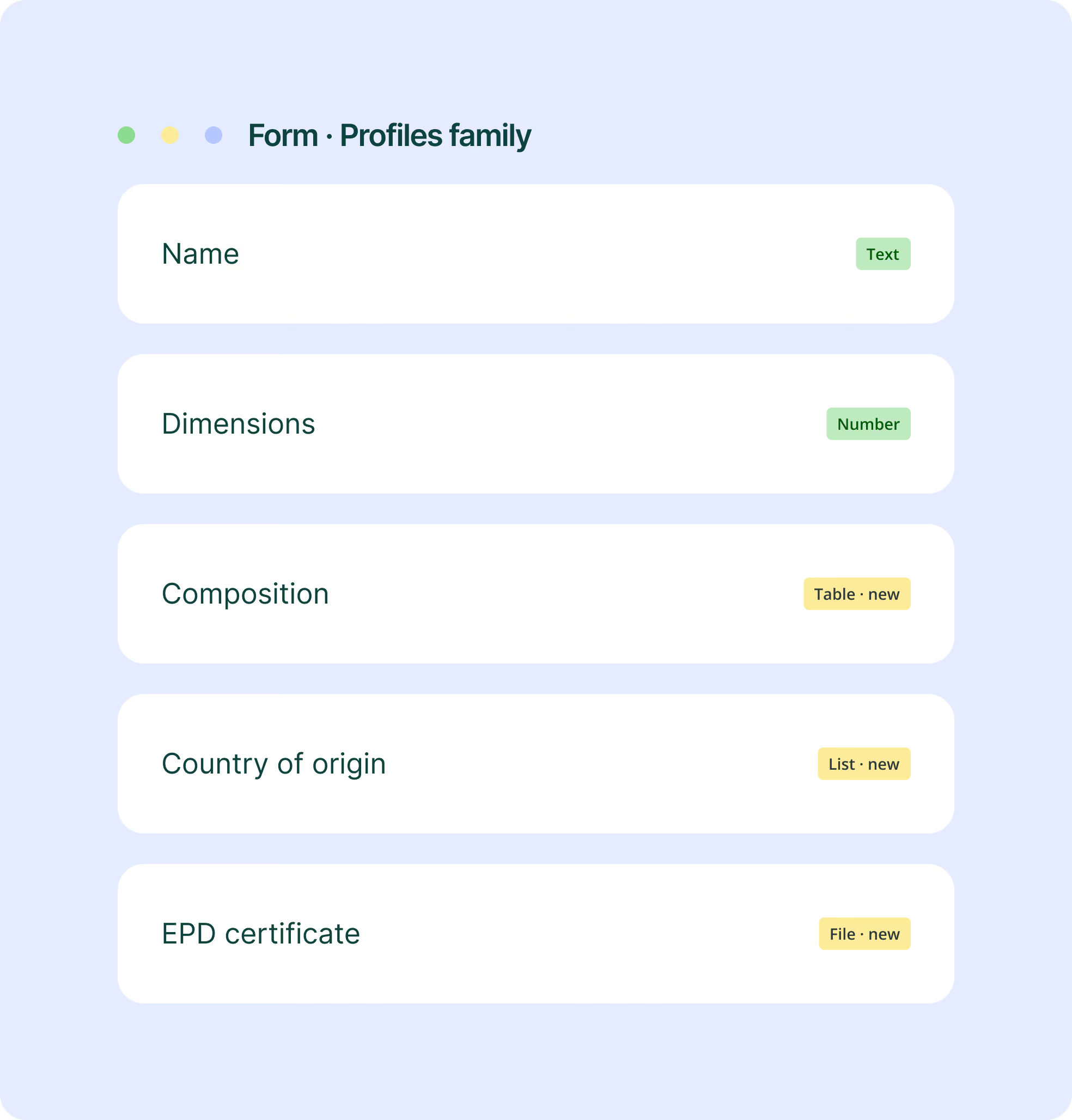
Add the fields your sector requires to your catalog. Families, typed fields and variants make sure only the affected products see those fields. The rest of the catalog is untouched.

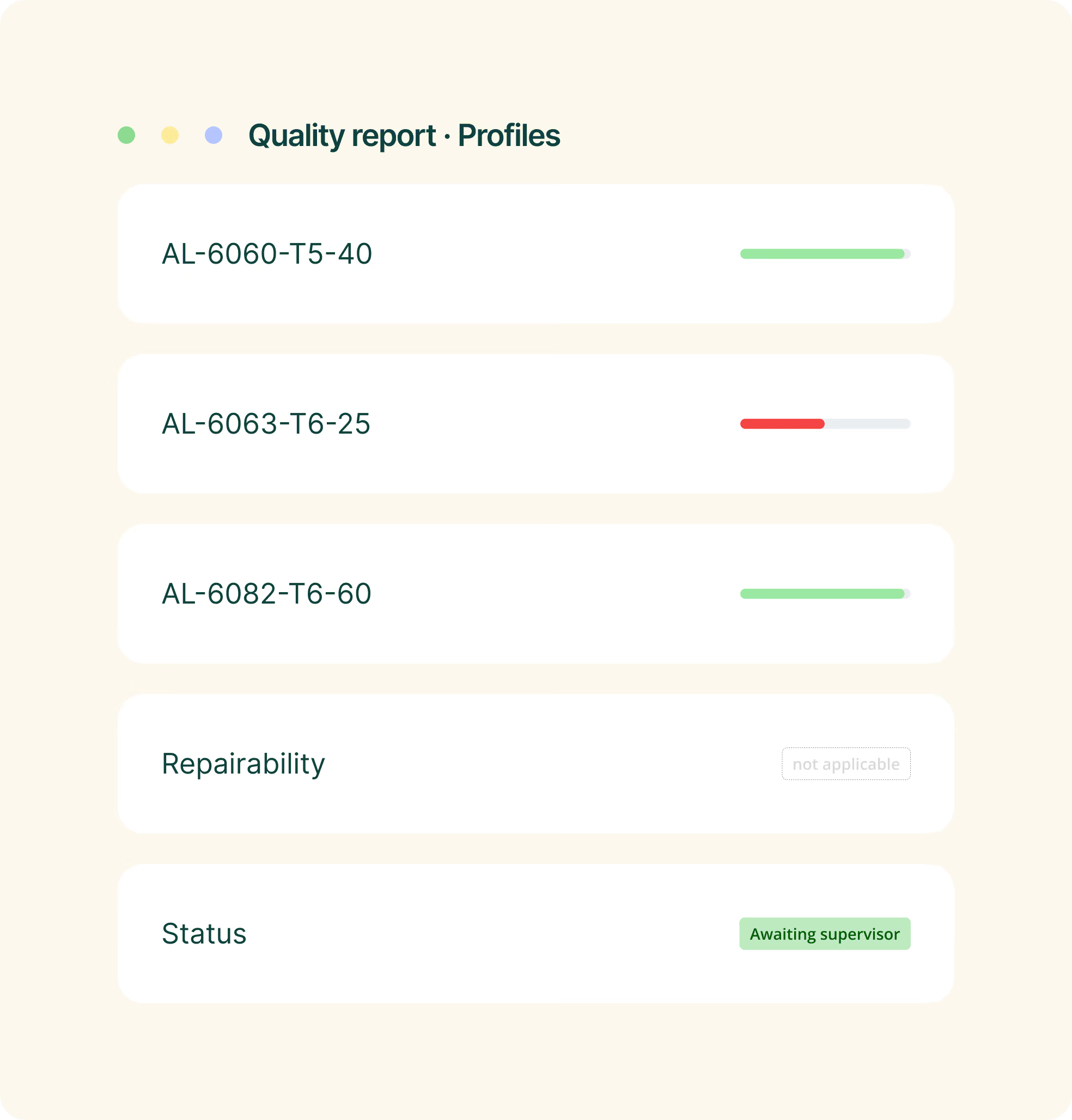
The Quality Score and validations tell you which product has gaps and where, without exporting anything. Workflows make sure a supervisor approves before anything leaves the PIM.
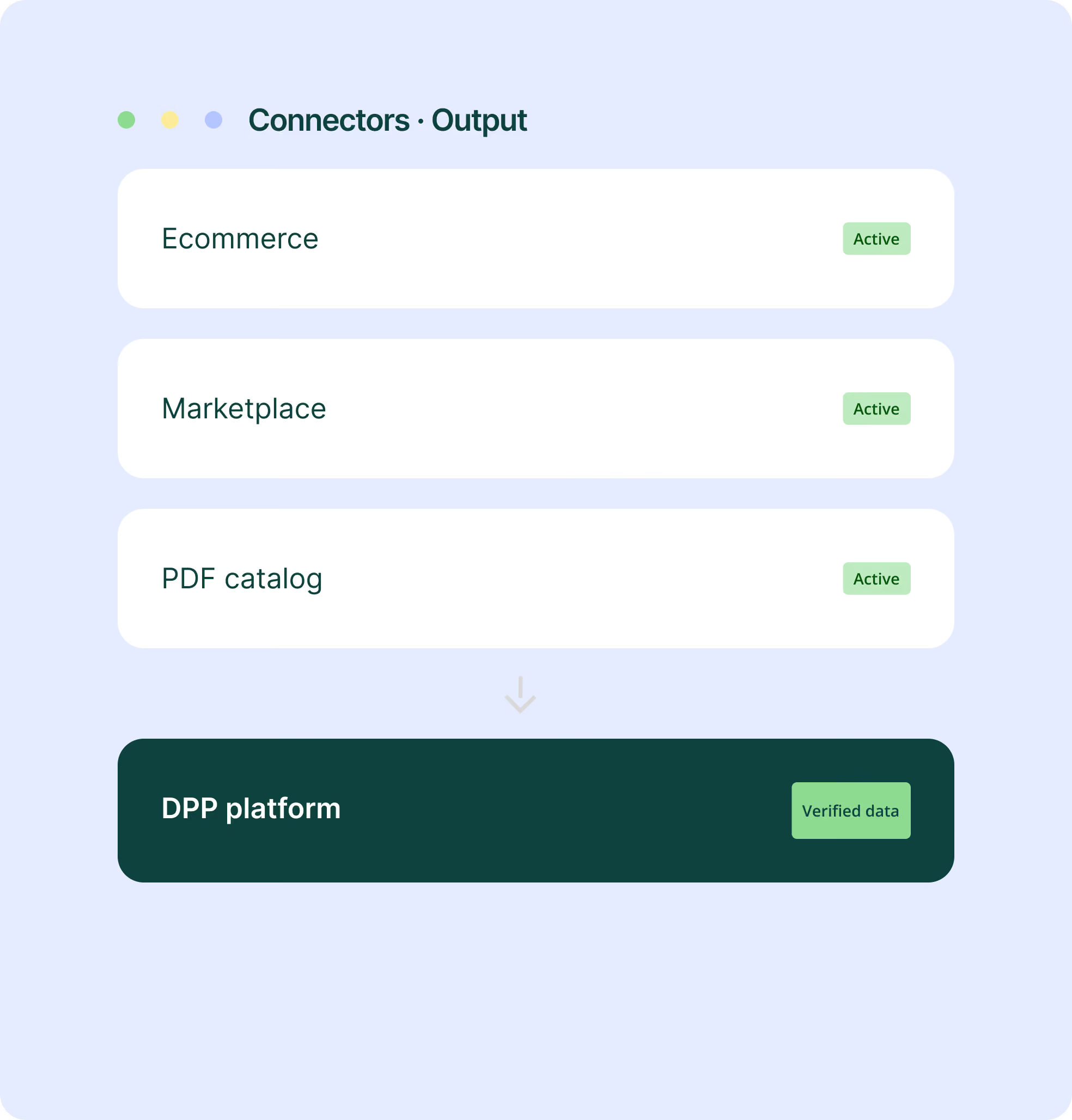
Send the verified data to the DPP platform of your choice through connectors. Your PIM remains the source of truth and keeps feeding web, marketplaces and PDF catalogs.
The DPP is split across two layers. Sales Layer takes care of the first and connects to the second.

The catalog you already have, with the fields your sector requires, verified and approved by your team.
Catalog and sector data profile
Verification: Quality Score and validations
Human approval and traceability
Delivery through connectors
The specialized DPP platform of your choice receives your verified data and handles what regulation requires outward.
Product identifier and QR code
Publication and role-based access
Relationship with the European system
Open to the compliance experts you already work with

DPP Hub: where we are heading
Our vision for the Digital Product Passport in Sales Layer: sector data profiles that evolve with regulation, a readiness check per product and connection to specialized DPP platforms. Without duplicating your catalog and without tying you to a single provider.
Connect your Sales Layer catalog to any AI platform through our MCP Server. Use your product data with Claude, ChatGPT, or any MCP-compatible tool, no complex integrations required.
.svg)
AI Agents: detect and normalize
They flag gaps, unify units and translate. Everything goes through Review Mode.

MCP Server: audit by asking
Ask your catalog which products have no country of origin. Read-only: it changes nothing.

Workflows: approve with judgement
Who reviews what, and in which order. What is not approved is not published.
The AI never fills in composition, origin, footprint or certification data on its own.
DPP regulation will arrive sector by sector, in waves. The catalogs with the most attributes and technical documentation gain the most by preparing now.
Plastics
Recycled content
Building materials
Data sheets and DoP

Electrical
Certifications
Furniture
Materials and repairability

Chemicals
Composition and safety
Machinery
Components and spare parts
Lighting
Efficiency and circulatiry
Andrés Mendigacha
Professional Channel Manager · Bellota

Preparing for the DPP with spreadsheets and emails, or with the catalog you already govern in Sales Layer.

Data spread across ERP, PLM, PDFs and Excel
One template per sector, rebuilt with every change
Nobody knows who validated what, or when
A parallel database just for the DPP

One catalog, with the DPP layer on top
Sector fields and rules adjusted in hours
Human approval and a history of every change
Connectors to the DPP platform of your choice
AI Agents detect gaps, normalize and translate under human review, and the MCP server lets you audit the catalog by asking. They never fill in regulated data such as composition, origin or certification on their own.
A European system that gives access, through an identifier on the product, to sustainability, circularity and compliance information. The specific requirements depend on each sector's regulation.
No. The code is the access point. The work lies in collecting, structuring, validating, maintaining and versioning the information behind it.
Because sorting out sources, owners, evidence, variants, languages and documents takes months. With a flexible model, when the final requirement is published you adjust the profile, not the catalog.
No. Sales Layer acts as the source of truth for product data and connects to the DPP platform of your choice.
Sales Layer helps you prepare, verify and govern the data. Accuracy, the applicable obligation and legal responsibility remain with your company and your advisors.
The architecture is open: Sales Layer prepares the data and delivers it through connectors to specialized DPP platforms. Talk to us to review your case.
Sales Layer governs the model and the variant. Batches and units usually live in the ERP or the DPP platform; there is no need to load millions of units into the PIM.